You Don’t Think of Yourself as a Writer. You Just Keep Writing Things Down.
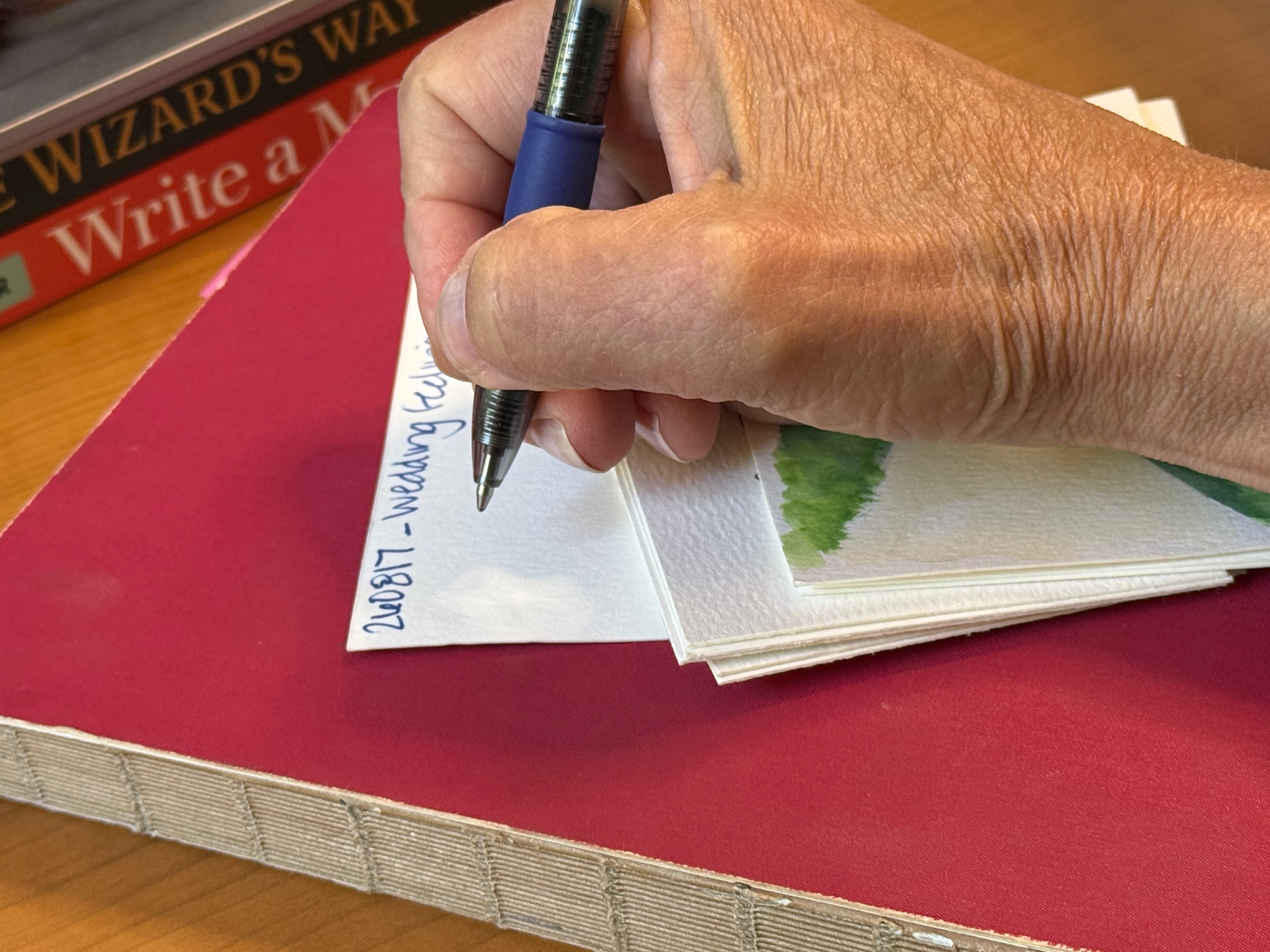
My son is about to get married, and in the middle of the countdown, I felt something I knew I’d want to remember later. So I opened a new file on my computer, titled it 260817_wedding feelings, and gave myself 15 minutes to write, which generally amounts to about 500 words. I didn’t obsess or edit. I just wrote a messy draft and let it sit so I can process it and use it later.
I posted about it on Instagram, and one commenter asked for more: the full process, with examples. So here it is.
Step one: the journal entry
This part doesn’t need to take much time. Open a file. Date it and give it a topic.
Set a timer for fifteen minutes and write until it goes off. I don’t always time it; usually I just feel when I’ve written everything I need to write in this messy draft.
At this point, I’m just getting the feelings out. I’m not writing for a reader yet. I’m writing so the moment doesn’t disappear from my memory, because that is happening more as I get older.
Most of what goes into a journal entry will never make it into a book. Which is fine. That’s not the point of journaling, at least for me. Journaling is about capturing the raw feelings, emotions, and texture. Later, I’ll take that information and make the meaning from it.
That’s the difference between journaling and writing. Journaling is what happened. Writing is why it matters to someone else.
Step two: the notecard sort
This is the part most people skip, and it’s the part that actually turns journals into something bigger.
When I’m thinking about a book or trying to find a theme for a Substack or a talk, I go back through old journal entries for inspiration.
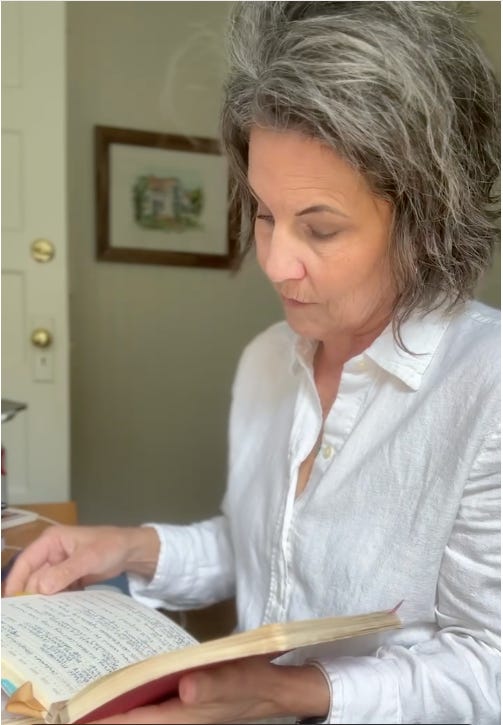
I extract moments and feelings that loosely fit my idea or that I want to write more about. I put that on a notecard with the journal date, the theme, the person, or the feeling attached to it. I may find one or several within a single journal entry. At this point, the theme is simple — perfectionism, feeling unseen, or gratitude for x, y, z.
The journal holds the raw emotion of what happened. The notecard becomes the vessel for holding what I can sort into something useful.
An important distinction because a handwritten journal is chronological, and an online one may be, too. But a book may not be.
The manuscript comes from pulling the threads that belong to the story you’re actually telling, the one that will matter to a reader, and setting the rest aside, at least for now.
Why the notecard, specifically
A notecard forces you to do the work of naming the takeaway, the person or feeling attached to it. It’s the beginning of the refining process.
You’re not summarizing the whole entry. You’re tagging it so future-you can find it when you’re sorting for a chapter, a theme, a through-line.
Once you have a stack of these, you can lay them out and start to see what you’re actually working with, which threads keep showing up and which don’t. You can’t see that pattern from inside a single journal entry, and the notecards give you a little distance from the material.
If you’re sitting on years of journals
Reading them all in order and hoping a book appears is one way to do it, but it’s often hard to differentiate what’s important from what isn’t. A system for extracting what belongs and setting it where you can see it next to everything else is the difference between a drawer full of journals and material you can actually shape into something.
That’s exactly the work I do with clients. If it’s useful to talk through what’s in your own drawer, the link to book a call is in my bio.
This isn’t the end of the notecards’ usefulness. I’ll write more in another post about how I use the chosen notecards to test how the materials work together to create scenes and chapters.
If this was useful, forward it to someone who’s sitting on the same stack of journals you’re sitting on.
This originally posted on Substack.
If you enjoyed this post, you may also like these:
-
The Chapter I Cut
I cut a chapter from my memoir, one of the hardest ones to write, and honestly, it hurt a little. Writing the whole memoir was therapeutic, but this chapter was harder than the rest because it involved a relationship that was very close and deeply important to me. It challenged…
-
The Role Had a Job Description. I Was Too Close to Read It.
The parts of the job that nobody puts in writing. When your oldest son proposes to his long-time girlfriend, you think you know what “mother of the groom” means. Find a phenomenal dress that coordinates with the mother of the bride, host the rehearsal dinner, and provide encouragement and support…
-
All The Pieces Were There. She Just Couldn’t See The Frame.
Claire came to me with a fully written manuscript for her nonfiction parenting book. We’d been friends for years, talking about the book on our walks. When I told her I was pursuing my book coach certification, she said, “I need you. Can I hire you now?” She didn’t need…