
The Mirror Was Never Objective. Neither Is Your Memory.
For most of my life, I dreaded having my picture taken. The woman I saw in the mirror and the woman in the photograph never seemed to be the same person. I would look at a snapshot from a day I had genuinely enjoyed and feel a familiar disappointment settle in, and after enough years of that, I simply concluded the camera and I were not friends.
Two years ago I decided to update my headshots, and I braced for the usual experience. I found a photographer named Lucia, and something on her website made me trust her with more than the technical job. She had spent ten years photographing women who look in the mirror and struggle with what they see, which told me she understood the territory I was walking in with.
The shoot itself was extensive, and some of the positions felt awkward, but I held them anyway because she clearly knew what she was doing. A week later we sat down to review the finished images, and I choked up. For the first time since my wedding, I actually liked pictures of myself.
Lucia saw something that was already there, something I didn’t often see on my own.
She didn’t change how I looked. She just had the distance to see it.
I had decades of evidence about what cameras do to me, and every piece of it was collected from inside my own perception and self-criticism. She was standing outside it, with trained eyes and real distance.
This year I need to do it again. I’ve grown since that shoot. I cut my hair and embraced the gray, and the woman in those photographs is a version of me that was true two years ago. Even an accurate picture has a shelf life.
You may have the same relationship with your story that I had with the mirror.
You lived it, which means you can only see it from inside. From in there, every memory feels essential, every version of the book feels equally true, and the material keeps expanding instead of settling into a shape. When you try to judge it yourself, you are in the position I was in for all those years. Your read on the material is real, and it is also the one view that can never include the whole picture.
The gap between how something looks from inside and how it looks from outside is what proximity does. It took a photographer with distance and skill about a week to show me what forty years of looking in the mirror never could.
You can keep staring at your own material. Or you can let someone see it.
If you know a woman who has been thinking about her book for years, forward this to her. Dear Kate is written for exactly that woman, and it always will be.
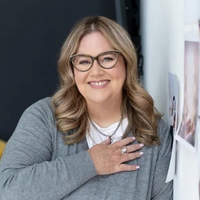
P.S. If this hit home, my friend Krista Smith has real insight into brand photoshoots and the mindset women bring to them. You can read her take here.
If you enjoyed this post, you may also like these:
-
The Chapter I Cut
I cut a chapter from my memoir, one of the hardest ones to write, and honestly, it hurt a little. Writing the whole memoir was therapeutic, but this chapter was harder than the rest because it involved a relationship that was very close and deeply important to me. It challenged…
-
The Role Had a Job Description. I Was Too Close to Read It.
The parts of the job that nobody puts in writing. When your oldest son proposes to his long-time girlfriend, you think you know what “mother of the groom” means. Find a phenomenal dress that coordinates with the mother of the bride, host the rehearsal dinner, and provide encouragement and support…
-
All The Pieces Were There. She Just Couldn’t See The Frame.
Claire came to me with a fully written manuscript for her nonfiction parenting book. We’d been friends for years, talking about the book on our walks. When I told her I was pursuing my book coach certification, she said, “I need you. Can I hire you now?” She didn’t need…